
The Short Answer
If your garage door starts closing and then reverses back up, or won't close at all, the most common culprit is the safety sensor system near the bottom of the tracks — not a broken opener or a dying door. These sensors are designed to stop and reverse the door the instant anything blocks their beam, including dirt, frost, or a sensor that's been bumped out of alignment. That said, sensors aren't the only possible cause, and the right fix depends on exactly how the door is behaving.
What the Symptoms Usually Tell You
Before any repair, it helps to notice the pattern:
- Door closes a few inches, then reverses: almost always a sensor or obstruction issue.
- Door closes most of the way, then reverses right before touching the floor: often a limit setting or track problem.
- Door won't move downward at all, opener just hums or clicks: could be a spring, opener logic, or wiring issue.
- Door reverses only in cold weather: points to sensor alignment shifting with temperature, or stiff hardware.
With the big temperature swings we get here — mild fall afternoons dropping into frosty nights — metal brackets, tracks, and sensor mounts expand and contract more than most homeowners realize. A sensor that was perfectly aligned in August can be a quarter-inch off by November, which is enough to cause intermittent reversing.
The Causes, Checked in the Order a Technician Would
1. Safety Sensors (Photo-Eyes)
These two small sensors sit a few inches off the ground on either side of the door, aimed at each other. If the beam between them is broken, dirty, or misaligned, the opener will not allow the door to close, or will reverse it mid-travel. The fix usually involves wiping the lenses clean, checking that both indicator lights are solid (not blinking), and gently adjusting the bracket until the beam lines up again. Road salt spray and blown debris from winter driving can coat these lenses faster than people expect, so this is worth checking every few weeks once the weather turns.
2. Sensor Wiring
If the lenses are clean and aligned but the lights still blink, the wiring between the sensors and the opener may be pinched, corroded, or chewed by pests. A tech will trace the wire run, check connections at both the sensor and the opener unit, and replace any damaged sections. This is a quick fix but often mistaken for a failing opener.
3. Opener Force and Limit Settings
Every opener has settings that tell it how far to travel and how much force to use before it assumes it's hit an obstruction and reverses. If these are set too sensitive, the door will reverse even with nothing in the way — more noticeable in cold weather when hardware stiffens slightly and needs a bit more force to move smoothly. Adjusting these settings is straightforward but should be done carefully, since settings that are too aggressive create a real safety risk.
4. Physical Obstructions and Track Debris
Leaves, acorns, small toys, or a buildup of ice at the base of the track can all trigger a reversal. A visual inspection of the full track run, top to bottom, usually catches this quickly. It's a simple fix, but worth ruling out before assuming anything electronic is wrong.
5. Track Alignment
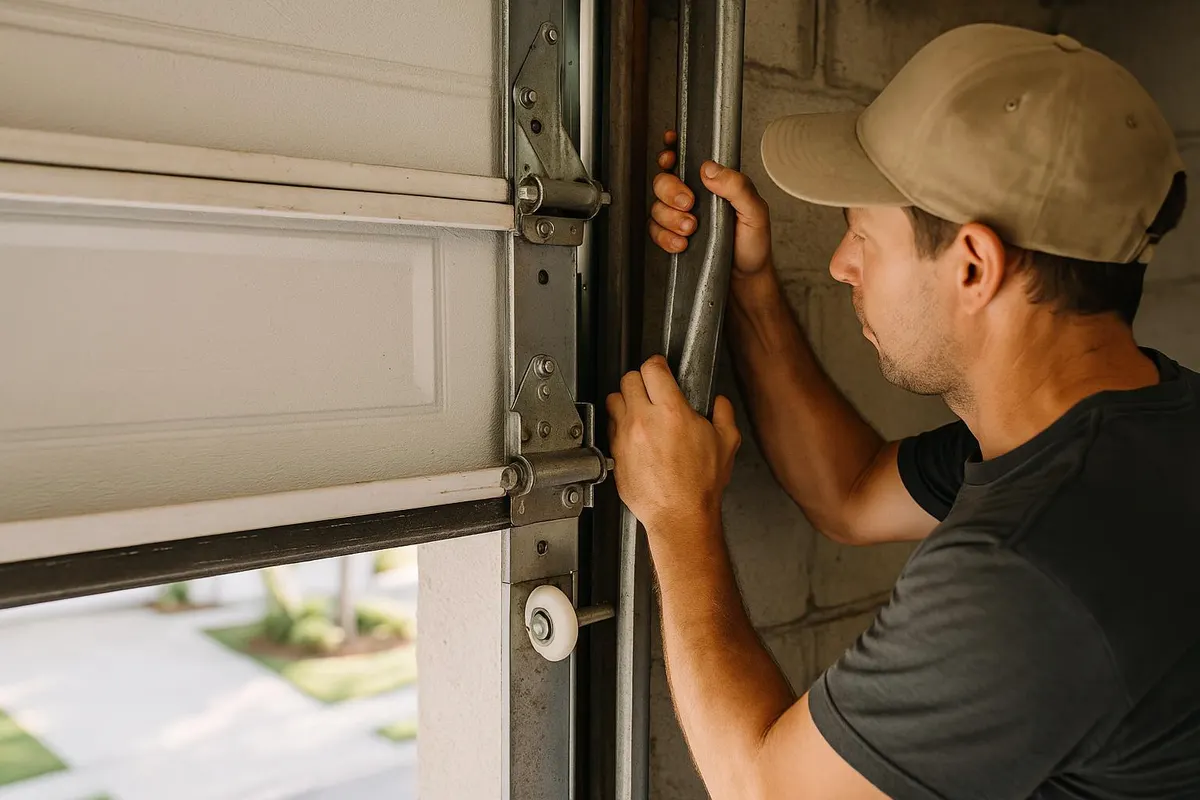
Tracks can shift slightly over time, especially in homes with the kind of seasonal ground movement common in this area. A bent or misaligned track causes the door to bind partway through its travel, which the opener reads as resistance and reverses to protect the door. Realignment involves loosening the track brackets, repositioning with a level, and retightening — sometimes paired with replacing a dented section if the damage is more than cosmetic.
6. Rollers and Hinges
Worn or dry rollers create uneven resistance as the door travels, which can mimic an obstruction. Technicians check for rust, flat spots, or cracked rollers, then lubricate or replace them. This is a good one to catch before winter, since cold, dry rollers put more strain on everything else in the system.
7. Spring Tension
If the door feels heavy, closes slowly, or the opener strains and reverses under load, worn springs are a likely cause. Springs lose tension gradually, and once they're off balance, the opener compensates by using more force — which often trips the safety reversal instead of actually closing the door. Spring replacement is not a DIY repair; it involves releasing stored tension safely and installing properly matched springs for the door's weight.
8. Opener Logic Board
If every mechanical and sensor check comes back clean and the door still won't close reliably, the opener's circuit board itself may be failing. This is less common but does happen, especially in older units, and usually means opener repair or replacement.
When to Call Barberton Garage Door
If you've checked the sensors and cleared the track but the problem keeps happening, or the door won't move at all, it's time to call in a technician rather than keep testing it. Barberton Garage Door handles both Garage Door Opener Repair & Installation and Spring Replacement, and we'll walk through the same checklist above to find the actual cause instead of guessing. If your door quits on you entirely — stuck open or closed — our Emergency Garage Door Service covers that too.
If your garage door is reversing, sticking, or refusing to close, call Barberton Garage Door. We serve Barberton, Akron, Norton, Wadsworth, Green, Coventry Township, New Franklin, and Clinton, and we'll get it diagnosed and fixed right the first time.