
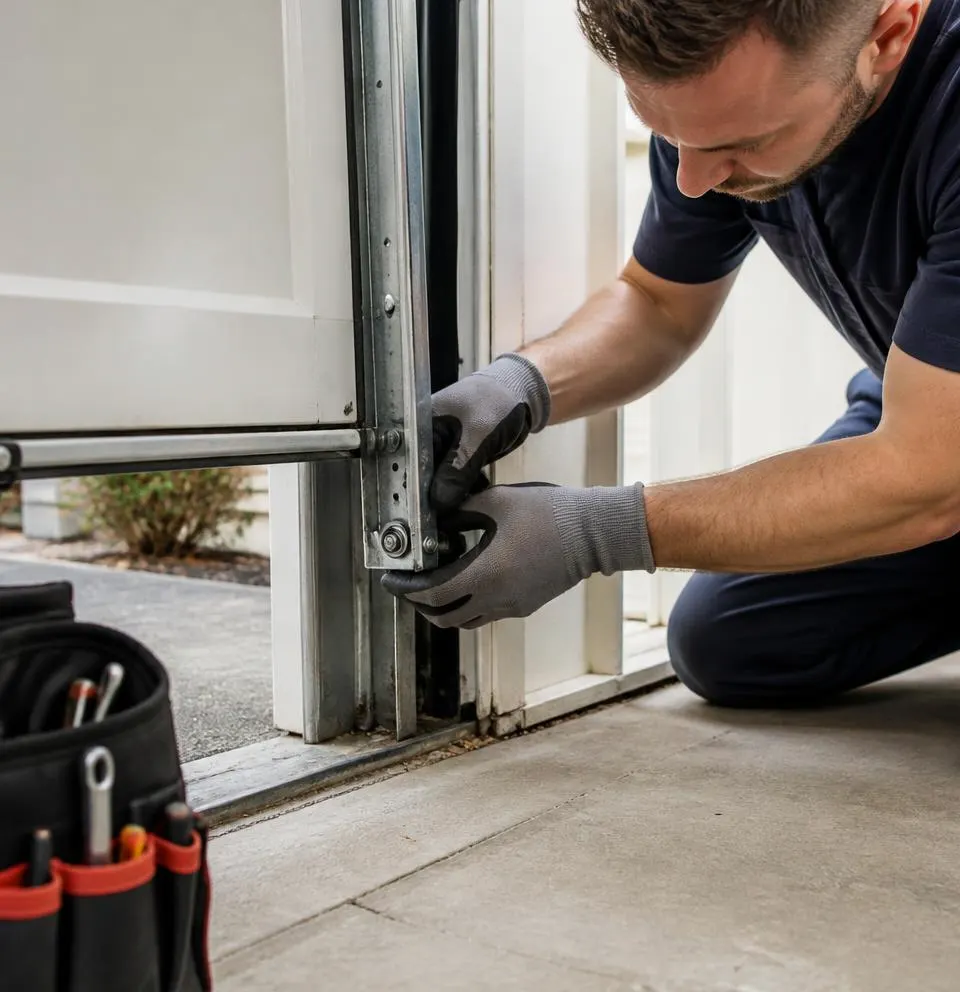
The Mistake Most Homeowners Make First
When a garage door starts sounding rough, the opener gets blamed first. It's the part making noise, the part you can see working, and the part with a control panel that feels fixable. So people reach for a screwdriver and start messing with the force or travel limit settings, hoping that'll quiet things down. It's an understandable instinct — the opener is the visible, mechanical thing doing the work in front of you. But in a lot of these cases, the opener isn't broken at all. It's straining because the door itself is out of balance, and no amount of adjusting the opener's settings will fix a problem that actually lives in the springs.
What "Balanced" Actually Means
A properly balanced garage door is one where the springs — not the opener — are doing almost all the work of lifting and lowering the door. The springs are sized to counterweight the door's weight almost exactly. When that balance is correct, you could lift the door by hand with two fingers. The opener's real job is just to add a small push to get things moving and to control the speed; it was never designed to haul the full weight of a door up and down a track day after day.
Signs Your Door Might Be Out of Balance
- The opener strains, groans, or slows down noticeably partway through opening
- The door reverses on its own before fully closing
- One side of the door looks lower than the other, or it looks slightly crooked in the frame
- The door feels noticeably heavier than it used to when opened manually
- The opener motor runs hot or the unit seems to be working harder as fall temperatures drop
Tools You'll Need
- A step ladder (for reaching the manual release cord if needed)
- Work gloves
- A second person to help, especially on wider double doors
That's really it. This is one of the few garage door checks that doesn't require special equipment — just a few minutes and a door that's willing to cooperate.
How to Test Your Garage Door's Balance
- Close the door completely. Start from a fully closed position so you have a clean baseline.
- Disconnect the opener. Pull the manual release cord (usually a red handle hanging from the trolley) so the door is no longer attached to the opener arm. You should now be operating the door by hand only.
- Lift the door to about waist height. Roughly three to four feet off the ground is enough to get a real read on how the springs are carrying the weight.
- Let go and watch. A well-balanced door will stay roughly where you left it, maybe drifting a few inches up or down. A door that's out of balance will either fall quickly toward the ground or shoot upward on its own.
- Repeat near the top of the travel. Raise the door almost all the way open and let go again. It should hold its position here too, not slam down or feel unusually light.
- Reconnect the opener once you're done testing, making sure the trolley locks back onto the carriage properly before using the opener again.
What a Failed Test Means for the Opener
If the door drops or rises on its own during that test, the springs aren't carrying their share of the load — which means the opener is. Every open and close cycle, the motor and gears are compensating for weight they were never built to handle. Over time this shows up as stripped internal gears, a chain or belt that stretches and jumps on the rail, and motors that burn out years before they should. An opener replaced because of this will usually fail again on schedule unless the actual spring problem gets fixed first.
This is worth paying attention to heading into the colder months. Steel garage door springs lose a bit of tension as temperatures drop, and a door that tested fine in the humidity of summer can start showing balance problems once overnight temps dip and the metal contracts. A door that's already borderline in October often gets noticeably worse by the time ice and road salt season sets in, so catching it now is cheaper than catching it in January when the opener finally gives out in the cold.
What You Can Safely Do vs. What Needs a Technician
The balance test itself, along with a few basic checks, is safe for a homeowner to handle:
- Running the balance test described above
- Visually inspecting the springs for visible gaps, rust, or a stretched-out coil
- Lubricating rollers, hinges, and the track with a garage-door-rated lubricant
- Clearing debris or old road salt residue off the tracks
What should not be a DIY project is anything involving the springs themselves. Garage door springs are wound under extreme tension — enough to cause serious injury if a cone slips or a bar is used incorrectly. Adjusting spring tension, repairing a frayed cable, or replacing a spring all require the right winding bars, clamps, and training. This isn't a job to learn by watching a video over the weekend.
When to Call Barberton Garage Door
If your door fails the balance test, drops suddenly, or the opener sounds like it's working too hard to lift it, that's the point to call in a technician rather than keep adjusting settings. Our Spring Replacement service resets the door's counterweight properly so the opener goes back to doing its intended job instead of compensating for a bad spring. If the opener itself has already taken damage from months of overwork — stripped gears, a worn-out chain, or a motor that runs hot — our Garage Door Opener Repair & Installation service can sort out whether it needs repair or a full replacement once the balance issue is corrected.
If you're in Barberton, Akron, Norton, Wadsworth, Green, Coventry Township, New Franklin, or Clinton and your garage door isn't behaving the way it should, give Barberton Garage Door a call. We'll check the balance, the springs, and the opener together, and fix what actually needs fixing before winter makes it worse.